Podcast · Shivani Agarwal Talks
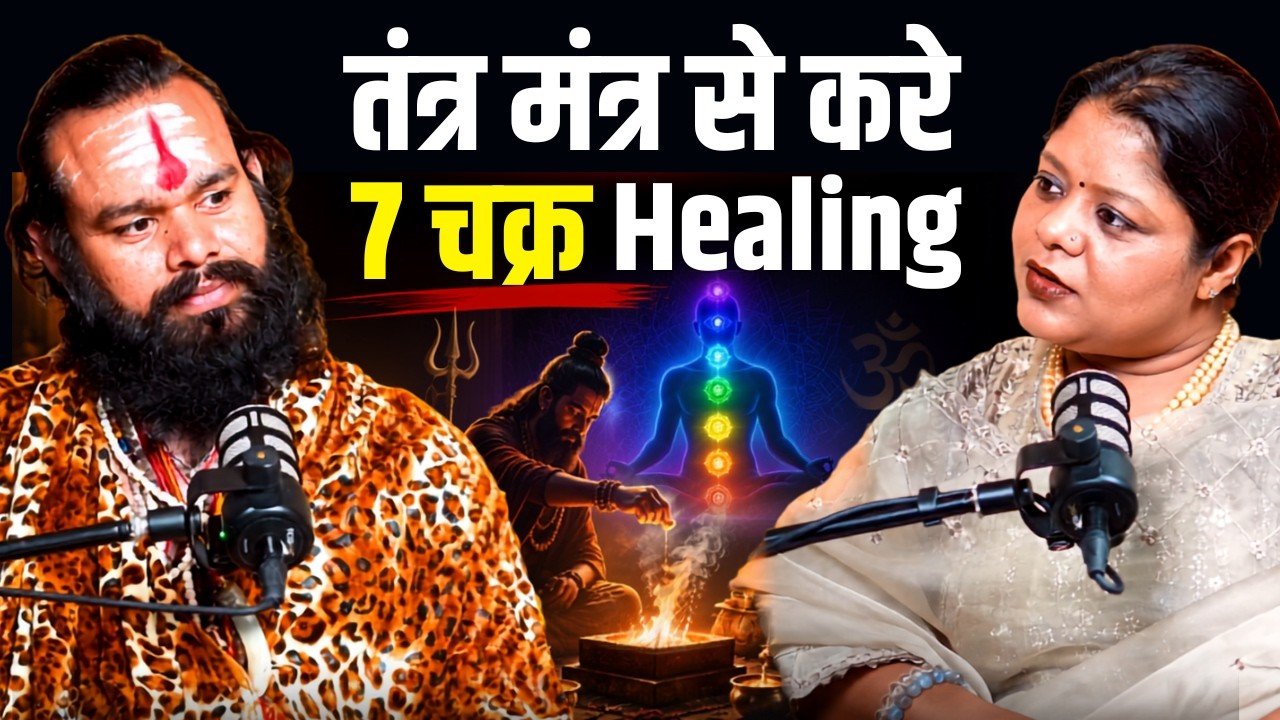
What Is Tantra Sadhana? Understanding Tantra, Mantras, Chakras, Ancestors and Spiritual Practices
Podcast details
Aghori Yoganad · Aghor Sadhna
Shivani Agarwal Talks
Explore Tantra, Kuldevi, Pitra Puja, mantras, meditation, chakras, Kundalini and spiritual practices
What is Tantra Sadhana? Where did Tantra originate? Is Tantra always associated with negative energy? What role do Kuldevi, Kuldevta and ancestors play in spiritual life? Can mantra chanting and meditation help a person develop inner balance?
These are some of the most common questions people have when they hear about Tantra, Aghora, spiritual practices, mantras and traditional Indian rituals.
In a detailed spiritual conversation with Yoganand Maharaj Ji, who follows the Aghor path, several important topics were discussed, including Tantra Sadhana, its origins, Kuldevi and Kuldevta worship, ancestor practices, mantras, meditation, chakras, Kundalini and spiritual protection.
This article presents the key ideas shared during that conversation in a simple and reader-friendly format.
What Is Tantra Sadhana?
The word Tantra often creates different images in people’s minds. Some associate it with Aghori traditions, mysterious rituals, supernatural powers or negative energy. Others see Tantra as an important part of India’s spiritual heritage.
During the conversation, Yoganand Maharaj Ji stated that Tantra Sadhana does exist and discussed it as a spiritual practice rather than simply something associated with fear or superstition.
One of the key points discussed was that the intention behind a spiritual practice matters.
According to the views shared in the conversation, using spiritual practices with greed, selfishness or the intention of harming another person can be considered misuse of the practice.
Therefore, when discussing Tantra, it is important to distinguish between:
· Spiritual discipline
· Traditional religious practices
· Personal spiritual experiences
· Cultural beliefs
· Claims about supernatural effects
These are not necessarily the same thing.
Where Did Tantra Originate?The origins of Tantra are interpreted differently across various Indian religious and philosophical traditions.
In this particular conversation, Yoganand Maharaj Ji connected the origin of Tantra with Lord Shiva and Goddess Parvati.
According to the perspective shared during the discussion, Tantra is traditionally associated with Shiva and Shakti, while different forms of Goddess Parvati are connected with various spiritual traditions within the broader Tantric framework.
This perspective presents Tantra as part of a broader Shiva-Shakti spiritual tradition, rather than simply as a practice associated with fear or dark rituals.
Is Tantra Always Negative?One of the most important questions discussed was whether Tantra itself is negative.
The conversation suggested that the intention and use of a practice are important.
A spiritual practice performed for personal growth, discipline or spiritual exploration is different from using a practice with the intention of harming another person.
The discussion strongly criticized the misuse of spiritual practices for greed or harmful purposes.
This is an important distinction because many people encounter Tantra primarily through sensational stories or social media content.
A balanced understanding requires looking beyond fear and understanding the cultural and spiritual context.
How Can You Identify a Fake Spiritual Practitioner?Another important part of the conversation focused on people who may take advantage of someone’s fear or personal problems.
According to the discussion, people should be cautious of practitioners who repeatedly frighten clients, keep extending the problem and continuously demand money without providing a clear resolution.
Warning Signs to Watch For
Be cautious if someone:
· Claims that every problem is caused by Tantra or negative energy.
· Constantly creates fear.
· Says that only they can solve your problem.
· Repeatedly asks for large payments.
· Threatens you with increasingly serious consequences.
· Tells you to completely disconnect from your family or normal life.
· Discourages you from seeking medical or psychological help.
A genuine spiritual guide should not need to control a person’s life through fear.
Kuldevi and Kuldevta: Their Role in Family Spiritual TraditionsKuldevi and Kuldevta hold an important place in many Indian families and traditional spiritual practices.
During the conversation, emphasis was placed on maintaining a connection with one’s family deity and understanding one’s traditional practices.
According to the views expressed, simply keeping a picture of a deity at home is not considered enough. The person’s devotion, respect, intention and connection with the tradition were highlighted as important.
The conversation also suggested that different Kuldevis and family traditions may have different methods of worship, offerings and rituals.
Therefore, people interested in following a particular family tradition should learn about it from their family elders, the relevant temple or a knowledgeable traditional practitioner.
What Is Pitra Puja and Why Is It Important?Pitra, or ancestral remembrance, is another important topic discussed in the conversation.
Respecting one’s ancestors has a long-standing place in Indian traditions. However, the conversation emphasized that ancestor remembrance should not simply mean keeping photographs and performing rituals without understanding their traditional purpose.
According to the views expressed, ancestors should be remembered and respected through appropriate traditional practices.
Different communities and families follow different traditions for Pitra-related rituals. Therefore, anyone wishing to perform specific rituals should follow their own family tradition or consult a knowledgeable religious practitioner.
Mantras are an important part of many Indian spiritual traditions.
During the conversation, the Mahamrityunjaya Mantra and Hanuman Chalisa were discussed in the context of spiritual practice and protection.
Yoganand Maharaj Ji explained mantras from the perspective of developing inner strength, awareness and spiritual energy rather than simply expecting an external supernatural force to appear and solve every problem.
This leads to an important practical idea:
Spiritual practice should not necessarily begin only when a person is facing a crisis. It can also become part of a person’s regular discipline.
Anyone beginning an intensive mantra practice should learn the appropriate pronunciation, tradition and method from a knowledgeable teacher or qualified practitioner.
The Spiritual Significance of OmThe sound “Om” or “Aum” was also discussed during the conversation.
Within Indian spiritual traditions, Om is widely associated with meditation, prayer and spiritual practice. The conversation discussed the use of Om as a sacred sound and its perceived influence on one’s spiritual environment.
However, spiritual experiences can differ significantly from one individual to another.
Therefore, claims about Om or other mantras producing specific supernatural effects should be understood as spiritual or traditional beliefs rather than established scientific conclusions.
Why Do Negative Thoughts Appear During Meditation?One of the most relatable topics in the conversation was meditation.
Many beginners say:
“Whenever I meditate, more thoughts start coming into my mind.”
According to the perspective shared during the conversation, thoughts, memories and mental images may appear during meditation because the mind is processing previously accumulated experiences.
The discussion compared this process to a kind of “deleting process”, where old mental information gradually comes to the surface and passes away.
What Should You Do When Thoughts Appear During Meditation?
Try these simple steps:
1. Do not panic when thoughts appear.
2. Avoid fighting with every thought.
3. Observe the thought and let it pass.
4. Gently bring your attention back to your breathing or meditation object.
5. Practice consistently rather than expecting immediate results.
The discussion described the appearance of thoughts as something that can occur during meditation and suggested that consistent practice can help develop greater focus.
If meditation causes severe distress, confusion or worsening mental-health symptoms, professional medical or psychological guidance should be sought.
The conversation also explored the traditional concept of seven chakras.
In yogic and spiritual traditions, chakras are described as subtle energy centers associated with different aspects of human experience.
Yoganand Maharaj Ji discussed different chakras in relation to qualities such as courage, intelligence, communication and personal strength.
He particularly emphasized the Muladhara Chakra, describing it as the foundation or root of the chakra system.
It is important to clarify that chakras are part of yogic and spiritual traditions and should not be confused with medically recognized anatomical organs.
According to the conversation, staying connected with the Earth and maintaining a grounded lifestyle were associated with the Muladhara Chakra.
The discussion mentioned practices such as:
· Yoga
· Running or physical activity
· Spending time in natural sunlight
· Staying connected with nature
· Traditional worship of Lord Ganesha
These were presented as spiritual approaches for maintaining balance.
From a practical lifestyle perspective, regular physical activity, time outdoors and a disciplined routine can also support general wellbeing, regardless of one’s spiritual beliefs.
Kundalini is another important concept within Indian yogic and spiritual traditions.
The conversation connected Kundalini with the chakra system and discussed spiritual experiences such as spontaneous movements or mudras during advanced practices.
However, Kundalini practices can be complex and are traditionally approached with guidance.
People should avoid attempting intense or advanced spiritual practices simply because they see dramatic claims on social media.
During the conversation, Yoganand Maharaj Ji was asked about a tooth-shaped object worn around his neck.
He identified it as a Shukra Dant or Varaha Dant and described its traditional spiritual significance, including beliefs regarding protection from negative or unwanted energies.
Such objects may have cultural, religious or traditional significance.
However, claims that a specific object can scientifically protect a person from supernatural forces have not been established as medical or scientific facts.
Fear was another major theme in the discussion.
The conversation described fear as something that can strongly influence how a person experiences unusual situations during spiritual practice.
This can also be understood from a broader psychological perspective: when people are already frightened, they may interpret unfamiliar sounds, shadows, dreams or bodily sensations differently.
Therefore, not every unusual experience should automatically be interpreted as a ghost, spirit or Tantric influence.
Sleep deprivation, anxiety, stress, intense meditation and other psychological or physical factors can also affect perception.
If unusual experiences are persistent or interfere with daily life, consulting an appropriate healthcare professional is important.
No.
This is one of the most important points to remember.
Business losses, financial problems, relationship difficulties, health issues, anxiety, sleep problems and family conflicts can have many real-world causes.
During the conversation, it was also emphasized that every individual and family can have different problems and that one single remedy cannot automatically solve every person’s situation.
For example, if a business is struggling, possible causes may include:
· Poor marketing
· Changing customer demand
· Financial mismanagement
· Competition
· Product quality
· Economic conditions
Similarly, health problems should be investigated medically rather than automatically attributed to negative energy or Tantra.
A balanced approach respects spiritual beliefs while also addressing practical causes.
Spiritual practices can be meaningful for many people. Prayer, meditation, chanting and religious traditions may provide a sense of discipline, community, meaning and personal reflection.
However, spirituality should complement—not replace—appropriate professional care.
If someone is experiencing:
· Persistent anxiety
· Severe sleep problems
· Hearing voices
· Hallucinations
· Extreme fear
· Confusion
· Sudden behavioral changes
· Thoughts of self-harm
they should seek appropriate professional medical or mental-health support.
Spiritual practices may be personally meaningful, but they should not be used as a substitute for necessary healthcare.
The conversation offers several broader lessons that can be useful even for people who do not personally practice Tantra.
1. Understand Your Intention
Before following any spiritual practice, understand why you are doing it.
2. Respect Your Traditions
Learning about your family traditions, Kuldevi, Kuldevta and ancestral practices can help you understand your cultural roots.
3. Avoid Fear-Based Spirituality
A spiritual guide should not need to frighten you into following their advice.
4. Practice Discipline
Meditation, prayer or mantra practice can become part of a consistent personal routine.
5. Seek the Right Guidance
Advanced spiritual practices should be approached responsibly and, where appropriate, under knowledgeable guidance.
6. Stay Grounded in Practical Life
Spirituality does not mean ignoring health, family, career, finances or other real-world responsibilities.
Tantra is a complex subject connected with India’s diverse spiritual, religious and philosophical traditions.
The discussion with Yoganand Maharaj Ji explored Tantra Sadhana, its connection with Shiva and Shakti, Kuldevi and Kuldevta worship, Pitra practices, mantras, meditation, chakras, Kundalini and spiritual experiences.
Perhaps the most important takeaway is that Tantra should not be understood only through fear, sensational stories or social media claims.
A more balanced approach is to understand the cultural and spiritual context, distinguish personal beliefs from scientifically established facts, choose spiritual guidance carefully and continue to address practical and health-related issues through appropriate professional channels.
For many people, spirituality can be a path toward self-awareness, discipline, reflection and inner balance.
The goal should not be to increase fear—but to increase understanding.
What is Tantra Sadhana?
Tantra Sadhana refers to spiritual practices associated with Tantric traditions. In the discussed conversation, Tantra was connected with the Shiva-Shakti spiritual tradition.
Is Tantra always negative?
No. The conversation did not present Tantra itself as inherently negative. It emphasized the intention and manner in which spiritual practices are used.
What is the role of Kuldevi and Kuldevta?
Kuldevi and Kuldevta are family deities traditionally respected and worshipped by many Indian families. Their specific rituals and traditions can vary from one family and community to another.
Can mantras protect us from negative energy?
The conversation described certain mantras as spiritually protective. However, supernatural protection from mantras is a matter of spiritual belief and should not be presented as a scientifically established fact.
Why do negative thoughts come during meditation?
Thoughts and memories can naturally arise during meditation. The discussion described this as part of a process in which previously accumulated thoughts gradually come to the surface and pass.
What is the Muladhara Chakra?
Muladhara is traditionally described as the root chakra in yogic traditions. The conversation associated it with grounding and discussed practices such as yoga, physical activity, connection with nature and Ganesha worship.
Is Tantra scientifically proven?
Tantric traditions are religious and spiritual traditions. Individual spiritual claims and supernatural effects should not automatically be treated as scientifically established facts.
Should every unusual experience be considered negative energy?
No. Unusual experiences can have many possible explanations, including stress, anxiety, lack of sleep, psychological factors and physical conditions. Professional help should be considered when experiences are persistent or disruptive.
FAQs